Living with vitiligo: Reuben's journey of self-acceptance
Reuben has vitiligo, and he’s clear about one thing:
"I have vitiligo, and it’s more than just a skin condition."
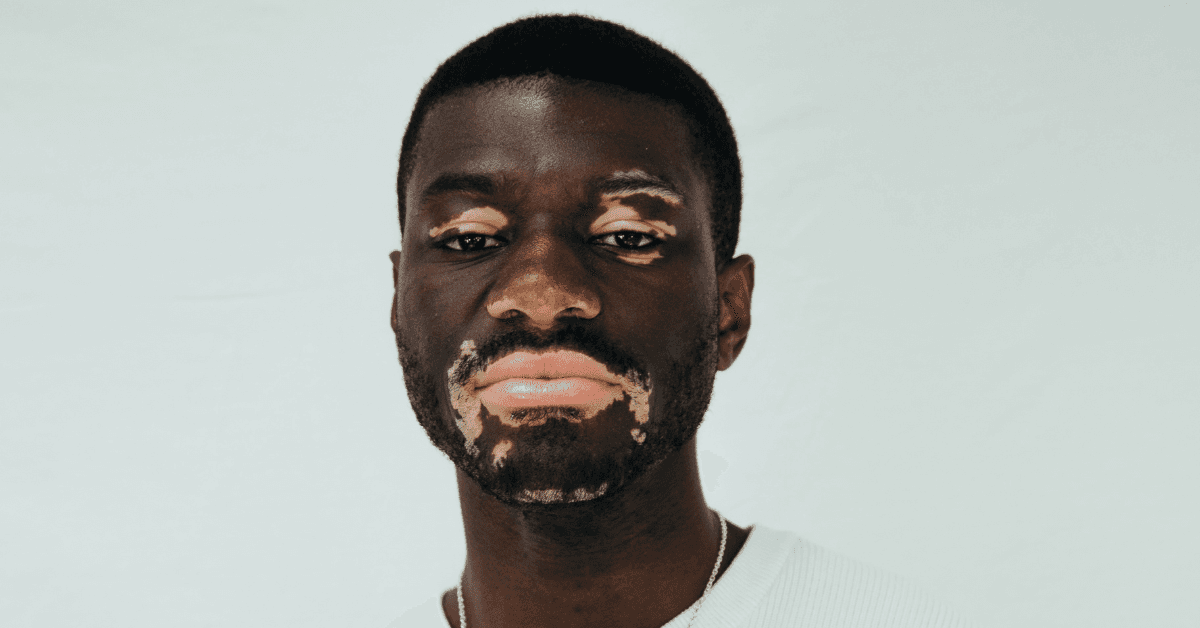
It’s a statement that reflects years of lived experience, strength, and self-acceptance. Vitiligo, a condition where patches of skin lose their pigment, is visible. But what’s not as easily seen is its impact on self-esteem and the way others perceive you.
In this article
A childhood marked by questions and stares
Diagnosed at the age of three, Reuben’s earliest memories include questions and stares. Growing up in Italy within a Ghanaian household already meant navigating dual identities. The presence of vitiligo added another layer. The comments were often uncomfortable, if not outright hurtful. “People would ask if it was contagious or if I could be cured,” Reuben recalls. “Those questions stayed with me. They made me feel different, like I didn’t belong.”

As a child, those moments shaped how he moved through the world. Long sleeves, makeup, and avoiding social situations became coping mechanisms. Sports days, pool trips, and concerts were opportunities for exposure, both of skin and vulnerability. Representation was scarce. Without public figures who looked like him, Reuben found it harder to view his vitiligo as anything other than something to conceal.
Finding strength through shared experiences
But over time, that perspective shifted. Life experiences, growing confidence, and a determination to challenge stigma propelled Reuben to speak openly. He co-founded Vitiligo Allies, a platform dedicated to providing support, connection, and visibility for others with the condition. Through this, he amplifies voices and highlights the mental and emotional aspects of living with vitiligo.
Embracing vitiligo: Shaping identity and challenging societal perceptions
“It can be an icebreaker, but it’s also a reminder that people often react to what they don’t understand.” For Reuben, embracing vitiligo has meant taking control of the narrative. He no longer feels the need to justify or explain his appearance. Instead, he chooses to be visible in a way that encourages others to do the same. While he has opted not to pursue medical treatments, he supports those who do. “Everyone’s journey is different. For some, treatment offers a sense of stability, and that’s completely valid.”
Advancements in research and treatment are promising, offering those with vitiligo more choices. However, Reuben emphasises that societal attitudes need to progress alongside medical developments. Understanding and empathy remain crucial.
Vitiligo doesn’t affect my physical health, but it has shaped how I engage with the world.
Reuben K Sam
Fostering community and self-acceptance: Reuben's journey of resilience and empowerment
Looking forward, Reuben’s goal is clear: to continue fostering community and encouraging self-acceptance. He wants people with vitiligo to see that their value isn’t diminished by how their skin looks.
Today, vitiligo is not something I struggle with. It’s part of me, but it doesn’t define me. My experiences have given me resilience, confidence, and empathy for others who feel different.
Reuben K Sam
Through his advocacy, Reuben is not only challenging the stigma surrounding vitiligo but also inspiring others to find their own sense of pride and self-acceptance. His story serves as a reminder that true strength often lies in embracing what makes us unique.
Reuben K Sam
Donate to us now
By donating to skin disease research, you are helping us to find treatments and cures for common conditions like rosacea, acne and psoriasis through to potential killers like melanoma skin cancer. Thank you.